
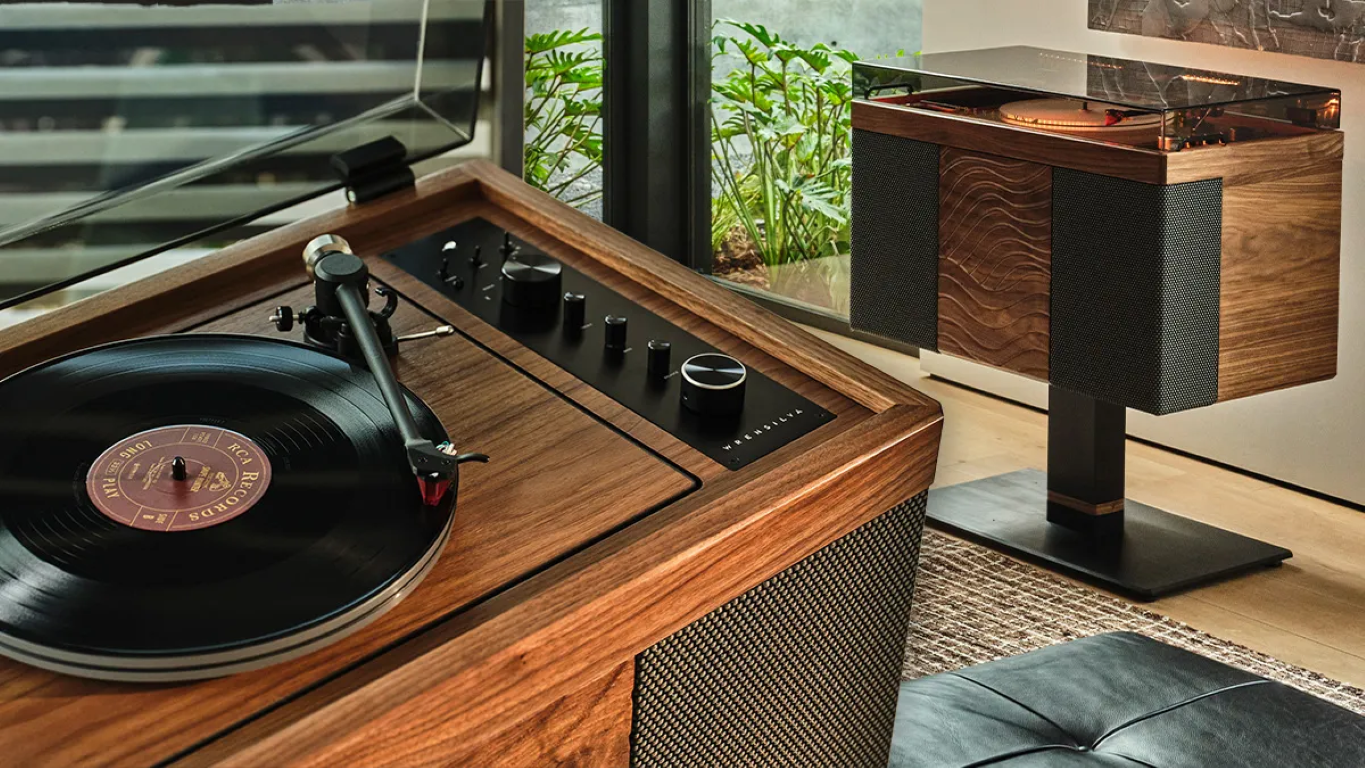
For most households, streaming and vinyl live separate lives. Sonos handles the everyday listening because it is easy to start music in the kitchen, move it to the patio, or keep something playing in the bedroom without thinking much about the equipment behind it.
The turntable usually asks for more commitment. You choose a record, play it in one room, and stay close enough to hear it through the system connected to that setup.
That split feels natural only because it has been common for so long. Records have been tied to a physical listening room, while streaming has been built around moving music through the house.
A record player with Sonos changes that arrangement. The physical ritual of vinyl stays intact, but the sound no longer has to remain in the room where the record is spinning.
Vinyl Does Not Have To Stay In One Room
Wrensilva consoles can connect with an existing Sonos system so a record playing on the console can also be heard through compatible Sonos speakers elsewhere in the home. The source remains the turntable, but the listening area expands beyond the room where it sits.
That changes how vinyl fits into ordinary routines. A record can start in the living room and continue into the kitchen while dinner is being prepared.
If people move outside later, the same album can continue through Sonos speakers on the patio. Rooms can be grouped when everyone wants the same music or left separate when they do not.

The practical effect is that vinyl becomes less location-dependent. A console turntable still gives the listener the physical act of choosing and playing a record, but it no longer requires everyone to remain in one place for the duration of the side.
That matters because convenience often determines how frequently audio equipment gets used. A record collection that can follow the household through the day has more opportunities to become part of normal listening rather than something reserved for a dedicated session.
Streaming Gets The Better Sound System
The integration works in the other direction too. Wrensilva’s M1 and The Standard each deliver 200 watts per channel through integrated speaker systems designed to serve as the room’s primary audio setup.
Without streaming integration, that system is only active when someone decides to play a record or connect another local source. Sonos gives the same speakers a role during the rest of the day.
That changes the console from a specialized vinyl system into a broader household audio system. Someone can stream music through the same amplification and speakers used for records instead of maintaining a separate streaming setup in the same room.
For households that already rely on Sonos, that is an important distinction. The console becomes another zone inside the existing system rather than a parallel audio environment that has to be used separately.
The M1 and The Standard currently include Sonos alongside vinyl, Bluetooth, and auxiliary input. Studio offers vinyl, Bluetooth, and auxiliary as standard, with Sonos integration available as an option.
The value is not the number of available sources by itself. It is that streamed music can use the same system that was chosen for more deliberate vinyl listening.
Different Rooms Can Still Listen Differently
Whole-home audio does not require every room to play the same thing. Sonos allows individual rooms to operate independently and gives users the option to group them when synchronized playback makes sense.
That flexibility matters in shared homes. Someone can listen to a record in the living room while another person streams something different in the kitchen.
The record is available throughout the house without being imposed throughout the house. When guests arrive or everyone wants the same soundtrack, the zones can be grouped.
This makes the vinyl integration more practical than simply broadcasting the turntable everywhere all the time. The household keeps the flexibility that made Sonos useful in the first place.
Switching Sources Without Switching Systems
One of the biggest advantages of an integrated console is also one of the least dramatic. The music can continue when the source changes.
A record side ends, and the next thing someone wants to hear may not be in the collection. With separate systems, moving from vinyl to streaming can mean abandoning one set of speakers and waking up another device somewhere else in the room.
With the M1 or The Standard, the console remains the playback system while the source changes. Moving from vinyl to Sonos does not require moving to a different speaker setup.

Bluetooth and auxiliary input provide the same flexibility for other sources. The system stays in place while the listening method changes around it.
That low-friction transition matters because most households do not listen in neat categories. Someone may start with an album and move into a playlist without wanting the room itself to sound different.
One System For Two Ways Of Listening
Vinyl and Sonos are good at different things. Records provide a physical way to engage with music, while networked streaming makes that music easy to distribute throughout the home.
Bringing the two into the same system removes much of the separation between them. Vinyl gains access to rooms beyond the console, while streaming gains access to the console’s integrated speakers.
Wrensilva’s M1 and The Standard include Sonos functionality as part of the system, while Studio can be configured with Sonos as an option.
The result is a turntable that does not have to be reserved for occasional listening and a streaming system that does not have to live separately from the room’s primary audio setup. The record can stay physical without the listening experience staying confined to one room.
Wrensilva
+18002926353
1995 Main St, San Diego, CA 92113
